Can Praying Mantis Eat Hummingbirds | Predator Facts
I spend a lot of time watching hummingbirds in my yard. I sit quietly near my feeders and flowers, observing. Over time, you start to notice small things that most people miss.
One question I hear often is this. Can praying mantis eat hummingbirds
It sounds surprising at first. Hummingbirds are fast and alert. But nature can be harsh sometimes. I have seen moments that made me look twice and pay closer attention.
This topic matters if you keep feeders or enjoy watching hummingbirds up close. When we bring feeders into a garden, we also bring different insects. Some of those insects can become a real danger.
Let me explain what really happens based on what I have seen and learned from watching these birds every day.
I will keep it simple and real so you can understand what to look for in your own yard.
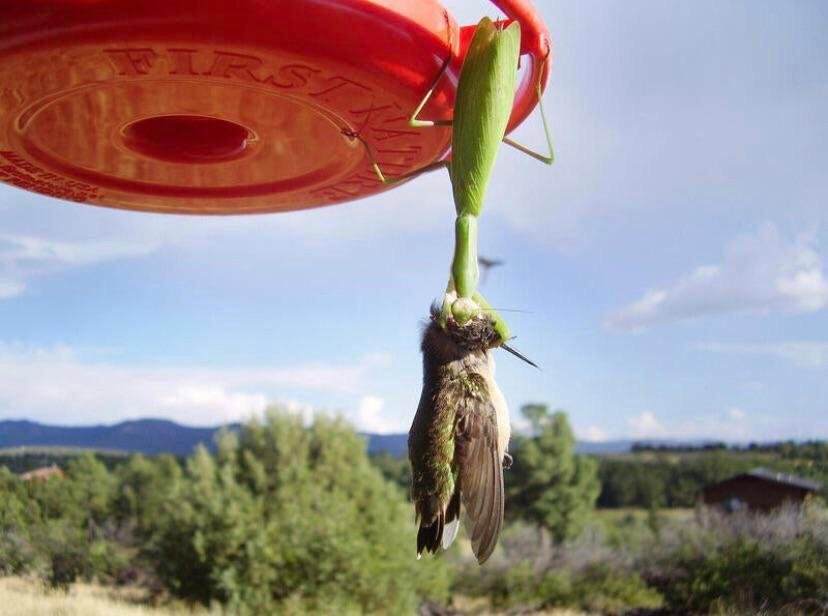
Yes, a praying mantis can eat a hummingbird. It does not happen all the time, but it is real. I have seen a mantis sit very still near a feeder, waiting. They are patient hunters.
A praying mantis uses its front legs to grab prey very fast. Those legs are strong and shaped to hold tightly. When a hummingbird comes close to feed, the mantis can strike in a split second.
Hummingbirds are very fast in the air. They can move forward, backward, and even hover. But when they stop at a feeder, they become more exposed. That is when a mantis has a chance.
I once noticed a hummingbird acting nervously near my feeder. It kept flying close but did not land. After a few minutes, I saw why. A green praying mantis was sitting right on the feeder port. It was almost invisible.
That moment showed me how smart these insects can be. They choose spots where hummingbirds often come.
Most of the time, hummingbirds can escape. They are quick and alert. But young or tired birds can be at higher risk. If a mantis gets a good grip, the bird may not be able to break free.
This is not something that happens every day. Still, if you keep feeders, you should be aware of this. It is part of nature, but we can help reduce the risk around our feeders.
Important hummingbird facts related to this topic
Hummingbirds have amazing speed. I often see them dart in and out like tiny flashes of light. This speed helps them avoid danger most of the time.
They also have sharp vision. A hummingbird can notice small movements quickly. That is why many birds avoid feeders when something looks off.
I have seen hummingbirds hover in front of a feeder and watch. If they feel unsafe, they leave right away. This behavior helps them survive.
Hummingbirds are also very territorial. One bird may guard a feeder and chase others away. When they are focused on chasing another bird, they may miss a hidden threat, such as a mantis.
Young hummingbirds are still learning. They are more likely to take risks. I have seen young birds land quickly without checking the area first.
Another thing I have noticed is that hummingbirds return to the same feeder again and again. They remember safe feeding spots. If a mantis appears, it can disturb that trust.
They also prefer clean feeding areas when. When many plants or objects surround feeders, it becomes easier for predators to hide.
Understanding these behaviors helps you see why a praying mantis can sometimes catch a hummingbird. It is all about timing, position, and surprise.
Common mistakes people make
One mistake I see often is not checking feeders closely. People fill them and walk away. But a praying mantis can sit right on the feeder and blend in. If you do not look carefully, you will miss it.
Another mistake is placing feeders too close to thick plants. I love having flowers around, but when plants grow too close, they create hiding spots. I have seen mantises use leaves and stems to stay hidden before moving onto the feeder.
Some people think mantises are always good for the garden. They do eat many insects, which helps. But they are not picky. If a hummingbird comes close enough, they will try to catch it.
I also notice that some feeders have wide perches. This makes it easier for a mantis to sit and wait. Feeders without perches are usually safer because hummingbirds hover rather than sit.
Another mistake is ignoring unusual bird behavior. If a hummingbird keeps hovering but does not feed, something may be wrong. I have learned to pause and watch when I see that. Many times, there is a hidden reason.
Helpful tips from a hummingbird watcher
I always check my feeders every day. It only takes a few seconds. I look around the feeding ports and the top of the feeder. If I see a mantis, I gently move it far away from the feeding area.
Try placing the reader in ma ora more open. Hummingbirds need a clear view. It helps them feel safe. It also makes it harder for predators to hide.
Choose feeders without large perches. I have noticed fewer problems since I switched to simple feeders. The birds hover, drink, and leave quickly.
Keep some distance between plants and feeders. You can still enjoy flowers nearby, but give a little space so nothing can hide too close.
Pay attention to your birds. Over time, you will learn their habits. When something changes, it stands out. That awareness can help you spot danger early.
If you see a mantis often, check more frequently. Late summer is when I notice them the most. That is when I stay extra careful.
Frequently Asked Questions
Can praying mantis eat hummingbirds often
No, it is not common. It happens sometimes, but not every day. Most hummingbirds are fast enough to avoid danger.
Are hummingbirds aware of praying mantis??
Yes, many hummingbirds can sense danger. I have seen them hover and watch before feeding. If something feels wrong, they leave.
Should I remove a praying mantis from my feeder?
Yes, I always do. I gently move it to another part of the garden. This helps protect the hummingbirds that visit the feeder.
What kind of feeder is safest for hummingbirds
Feeders without perches are usually safer. They make hummingbirds hover, which reduces the chance of being grabbed.
Do praying mantises only eat insects
No, they eat many kinds of prey. If they get the chance, they can catch small birds like hummingbirds.
Conclusion
So, can praying mantises eat hummingbirds? Yes, they can, but it is rare. It depends on the situation and timing.
From what I have seen, the biggest risk comes from feeders that allow predators to hide and wait. With a little care, you can make your yard much safer.
Keep your feeders clean and easy to see. Watch your birds and learn their behavior. Small changes can make a big difference.
I still enjoy watching hummingbirds every day. With a bit of attention, you can protect them and enjoy those quiet, beautiful moments in your own yard.

Sheri L. Williamson is a naturalist and hummingbird researcher. She studies hummingbirds and works to protect them. She is also the author of A Field Guide to Hummingbirds of North America in the Peterson Field Guide Series.